
The Director-Led Difference: Why Premium Builders Work Differently
When you’re choosing a builder for a custom home, it’s natural to focus on the finished work.
You look through project photos, read reviews, compare designs and try to understand the quality each builder can deliver.
But one of the most important differences between builders often isn’t visible in the photos.
It’s who is actually involved once construction begins.
You might meet the director during the first conversation, work with them through the proposal and feel confident they understand what you’re trying to achieve.
Then the contract is signed.
From there, the project can sometimes be handed to someone else.
That doesn’t necessarily mean the build will be poorly managed. Good project managers and site supervisors are an important part of any construction team.
But when you’re investing in a premium custom home, it’s worth asking:
Will the person I’m trusting now still be involved when my home is actually being built?
At Caton Constructions, being a director-led builder means Lachlan McDonald stays involved throughout the project — from the early conversations through construction and handover.
Not because one person should do everything.
A great build relies on architects, designers, engineers, consultants, supervisors and skilled trades all doing their part.
The difference is that the person ultimately responsible for the business stays close to the work and accountable for the outcome.
And when you’re building a home where the details matter, that involvement can make a real difference.
What Does a Director-Led Builder Actually Mean?
“Director-led” can easily become another marketing phrase.
What matters is what it looks like during the build.
For us, it means the director doesn’t disappear after the contract is signed.
Lachlan remains connected to the project, stays across key decisions and works with the team delivering the home.
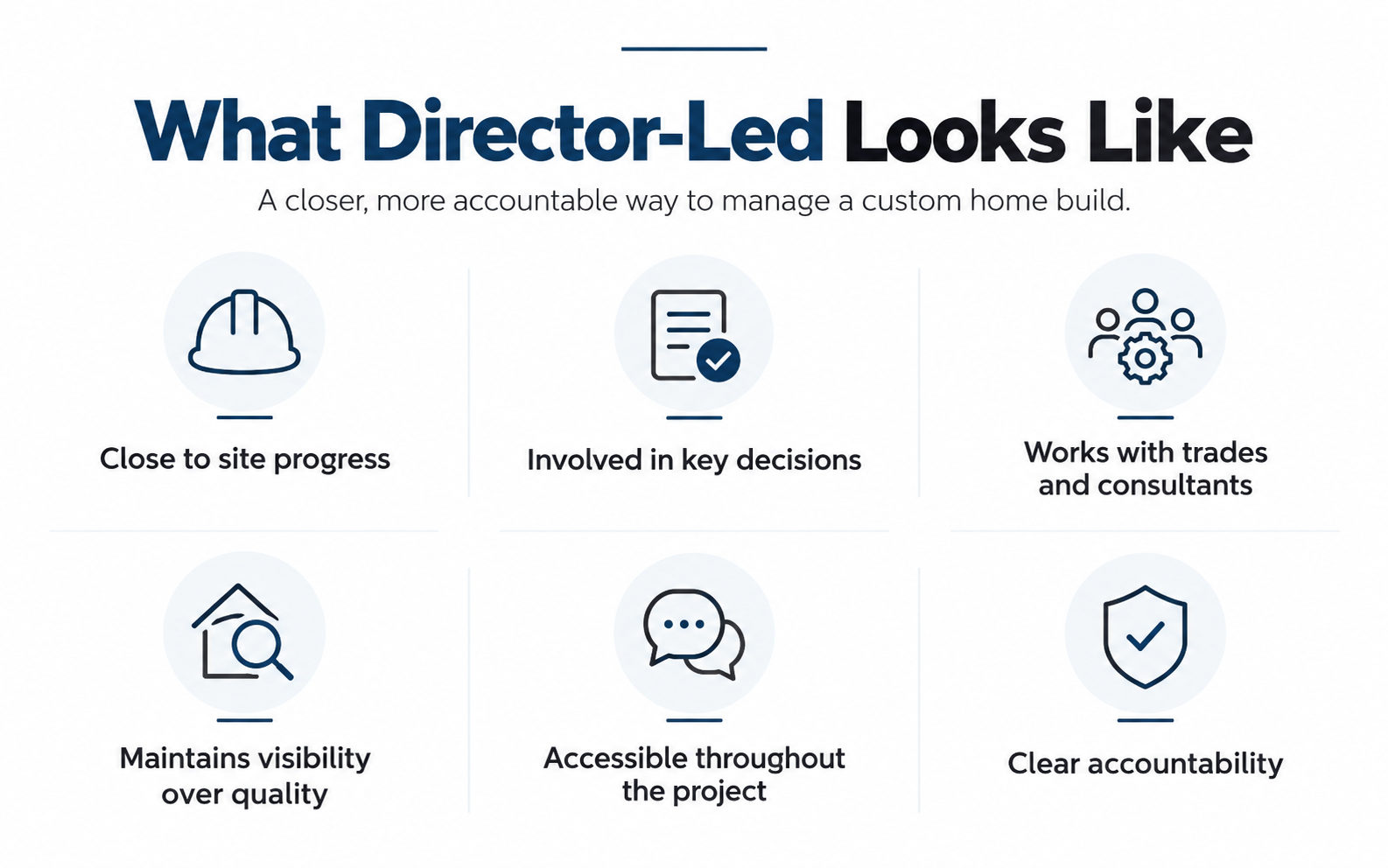
The aim isn’t to add another layer of management.
It’s actually the opposite.
It’s about keeping the person with the greatest responsibility for the result close enough to the project to make informed decisions and maintain accountability.
Premium Homes Are Built Through Hundreds of Small Decisions
A premium home isn’t created by one big decision.
It’s shaped by hundreds of smaller ones made throughout the build.
From material and joinery details to structural coordination and on-site problem-solving, these smaller decisions shape how well the original design is carried through into the finished home.
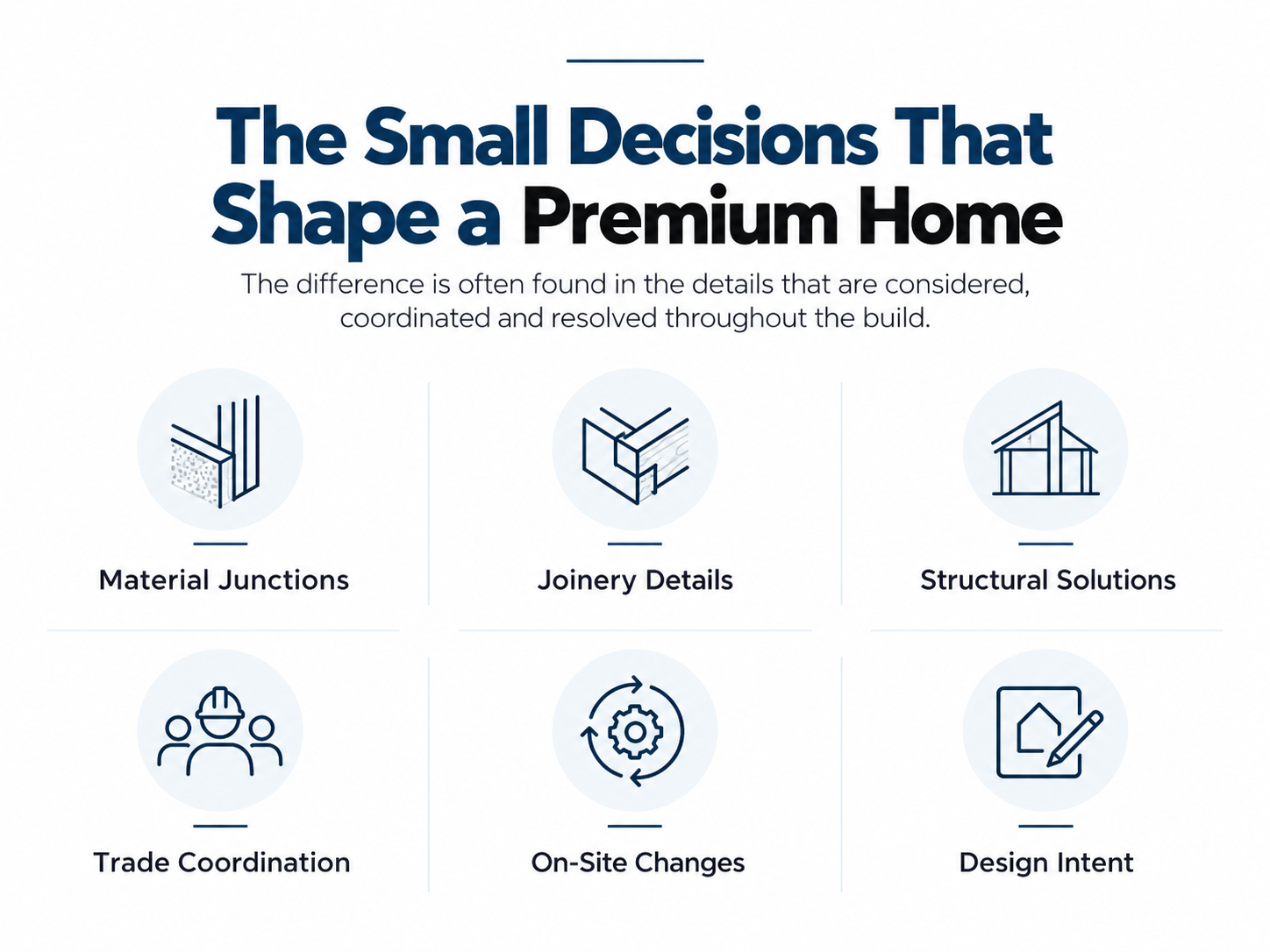
These decisions often happen on site, long after the original plans have been drawn.
Good drawings and documentation are essential, but construction still requires judgement, communication and problem-solving.
That’s why staying close to the work matters.
When the person responsible for the overall result understands the project and remains involved, decisions can be considered in the context of the whole home rather than treated as isolated issues.
The Project Manager Problem
There’s nothing wrong with having a project manager.
In fact, good project managers and site supervisors are essential to a well-run build.
The issue comes when the experience a client was expecting changes completely after they sign.
You may spend months discussing your project with one person.
They understand why certain details matter to you, how your family wants to use the home and what you’re trying to achieve.
Then construction begins and the project is handed over.
Suddenly, you’re working with someone who wasn’t part of those original conversations.
You may need to explain things again.
Questions can move through several people before reaching the person who can make a decision.
Communication can start looking like:
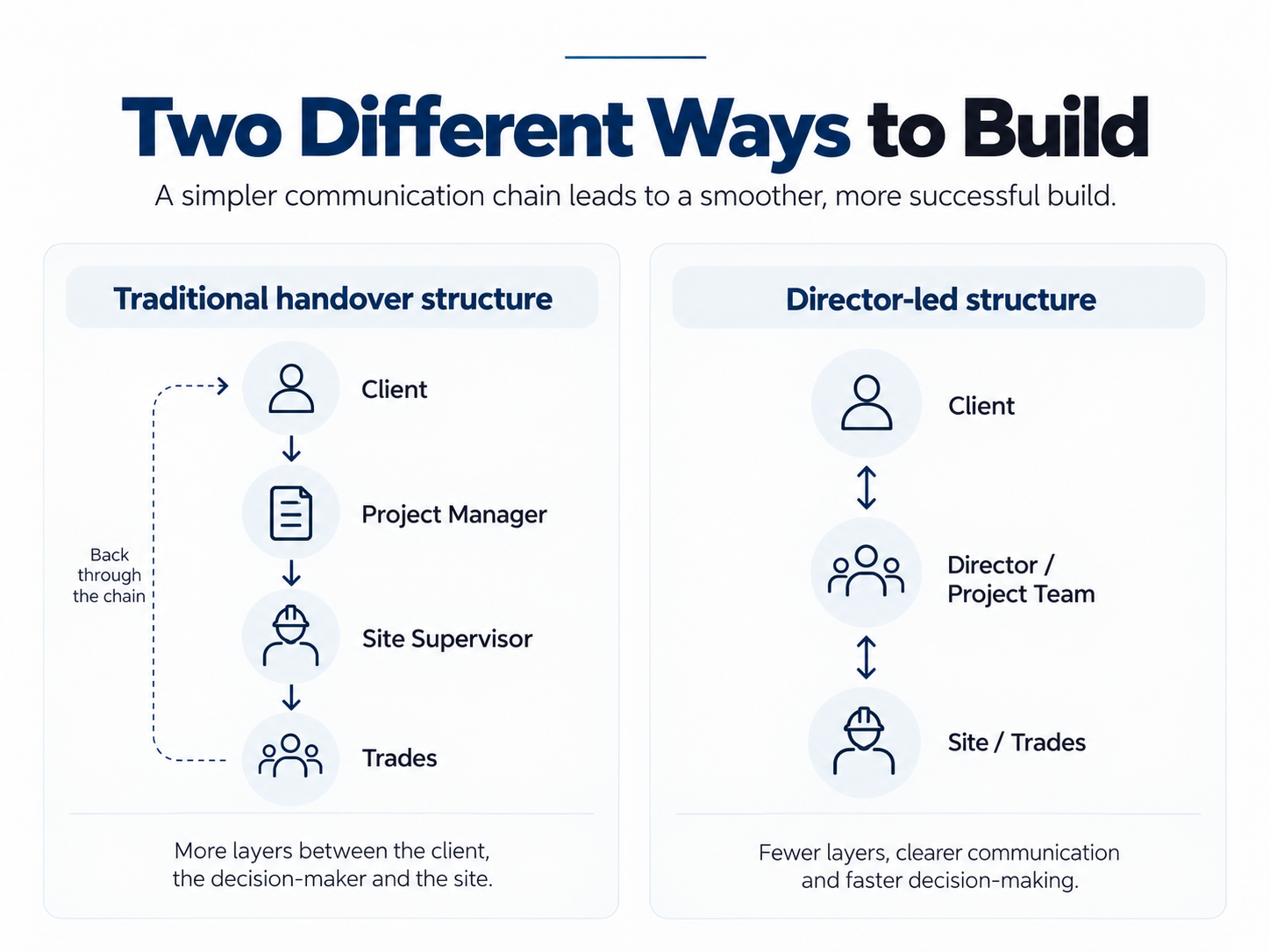
That structure can work.
But on a highly detailed custom home, too many layers can create distance between the original brief and what’s happening on site.
One of the biggest concerns homeowners have is choosing a builder they trust, only to feel like that builder disappears once construction begins.
A director-led model is designed to reduce that gap.
The project still has a team around it.
The difference is that responsibility doesn’t simply get handed over and forgotten.
What Lachlan’s Approach Looks Like
At Caton Constructions, the aim is continuity.
The person who understands what you’re trying to achieve at the beginning remains involved as the project moves through planning, construction and handover.
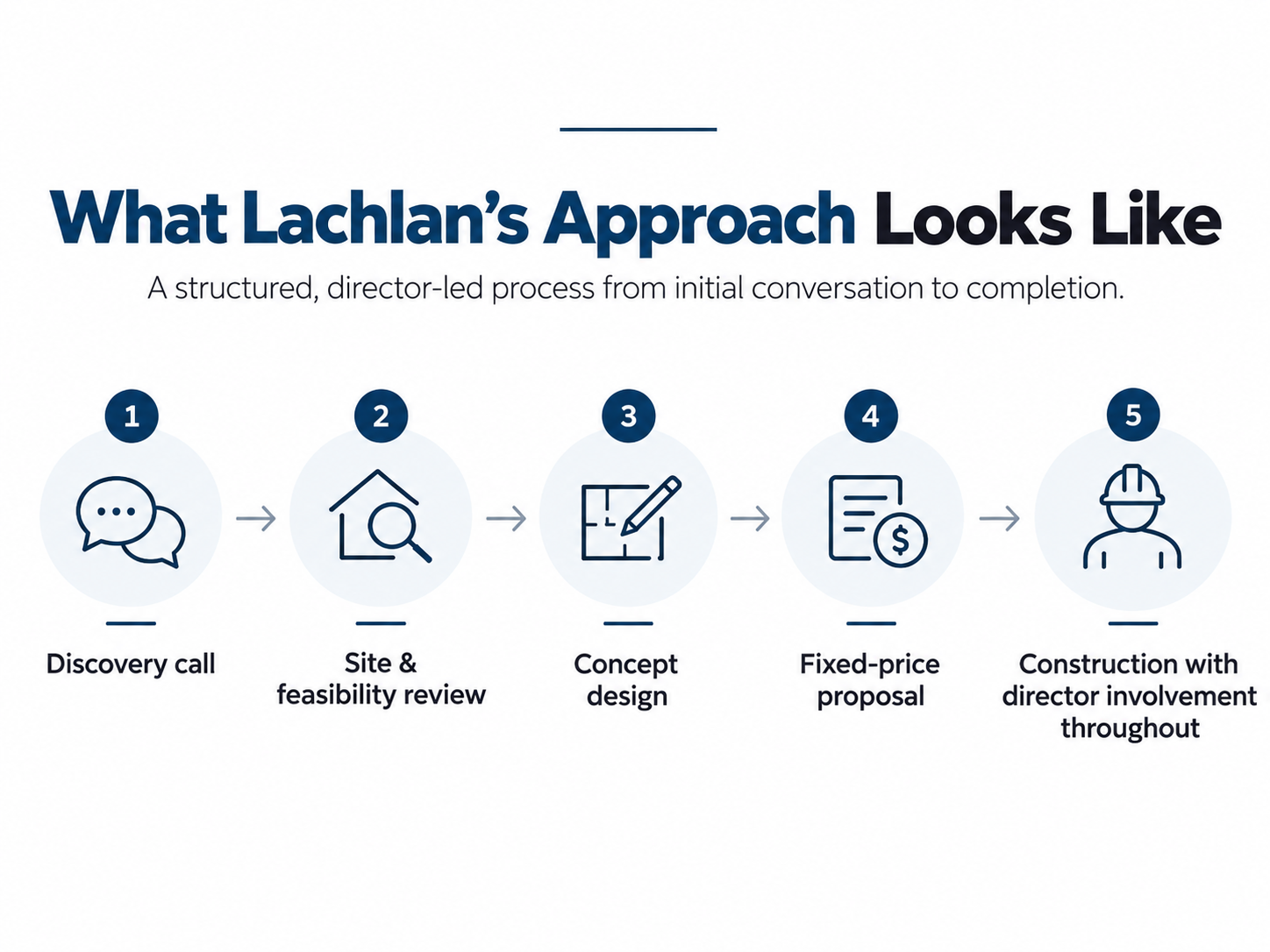
That continuity matters because questions will come up during construction.
A detail may need to be resolved.
A material may interact differently with another element than expected.
A trade may identify a better way to achieve the design intent.
A client decision may have an impact somewhere else in the home.
Staying close to the build means those conversations can happen with an understanding of the bigger picture.
Not simply:
“What’s the quickest way to solve this?”
But:
“What’s the right solution for this home?”
A Director-Led Build Is Still a Collaborative Build
Director-led doesn’t mean one person controls every decision.
The best custom homes are collaborative.
Architects bring the design vision.
Interior designers shape how the home feels and functions.
Engineers and consultants bring technical expertise.
Trades bring specialist knowledge and craftsmanship.
The builder’s job is to bring those parts together during construction.
That means making sure the design can be built properly, different trades are coordinated and decisions made on site still support the original intent.
For the homeowner, that coordination matters.
You shouldn’t have to become the person responsible for managing every conversation between the architect, consultant, trade and builder yourself.
The project should feel connected.
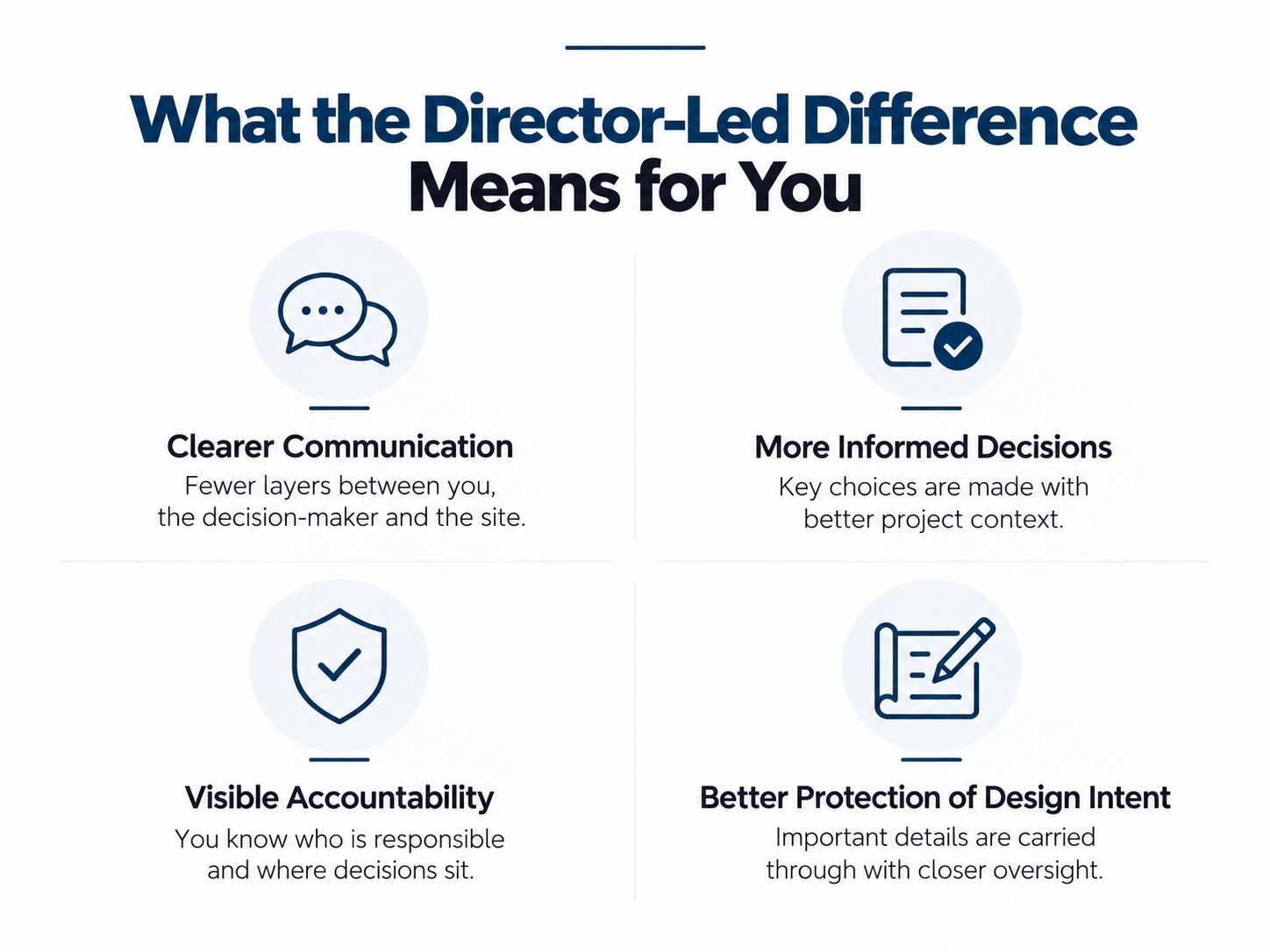
For a client, the benefit isn’t simply being able to say the director is involved.
It’s what that involvement can mean during the project.
Clearer Communication
Building a custom home involves a lot of decisions.
You should know who you can speak to when something needs clarification and feel confident that person understands the bigger picture.
More Informed Decisions
Construction doesn’t always wait neatly for the next scheduled meeting.
Questions can come up on site that need an answer.
When the director understands the project and stays close to the work, those decisions can be considered alongside the design, budget, program and client priorities.
Visible Accountability
When you’re making a significant investment in a home, you want to know that the standard discussed before the contract is signed still matters once construction begins.
A director-led structure keeps responsibility visible.
Different specialists may work on the home throughout the project, but accountability for the overall outcome stays clear.
Better Protection of the Design Intent
There can be a big difference between a home that looks good in a render and a home that feels right when you walk through it.
The difference is often in the build.
It’s in the details that are resolved properly.
The conversations between trades.
The decisions made when something on paper meets the reality of the site.
The care taken to make sure the finished home reflects what was originally intended.
That’s where involvement matters most.
The Boutique Builder Difference
Being a smaller builder doesn’t automatically make a business better.
The advantage comes when the scale of the business allows senior people to stay genuinely involved in the projects they take on.
That’s an important part of the boutique builder difference.
At Caton, the aim isn’t to build as many homes as possible.
It’s to take on projects where we can stay close enough to the work to maintain the level of involvement, communication and detail our clients expect.
For homeowners looking for a custom builder in Sydney, that’s worth understanding before choosing who to work with.
Ask the builder:
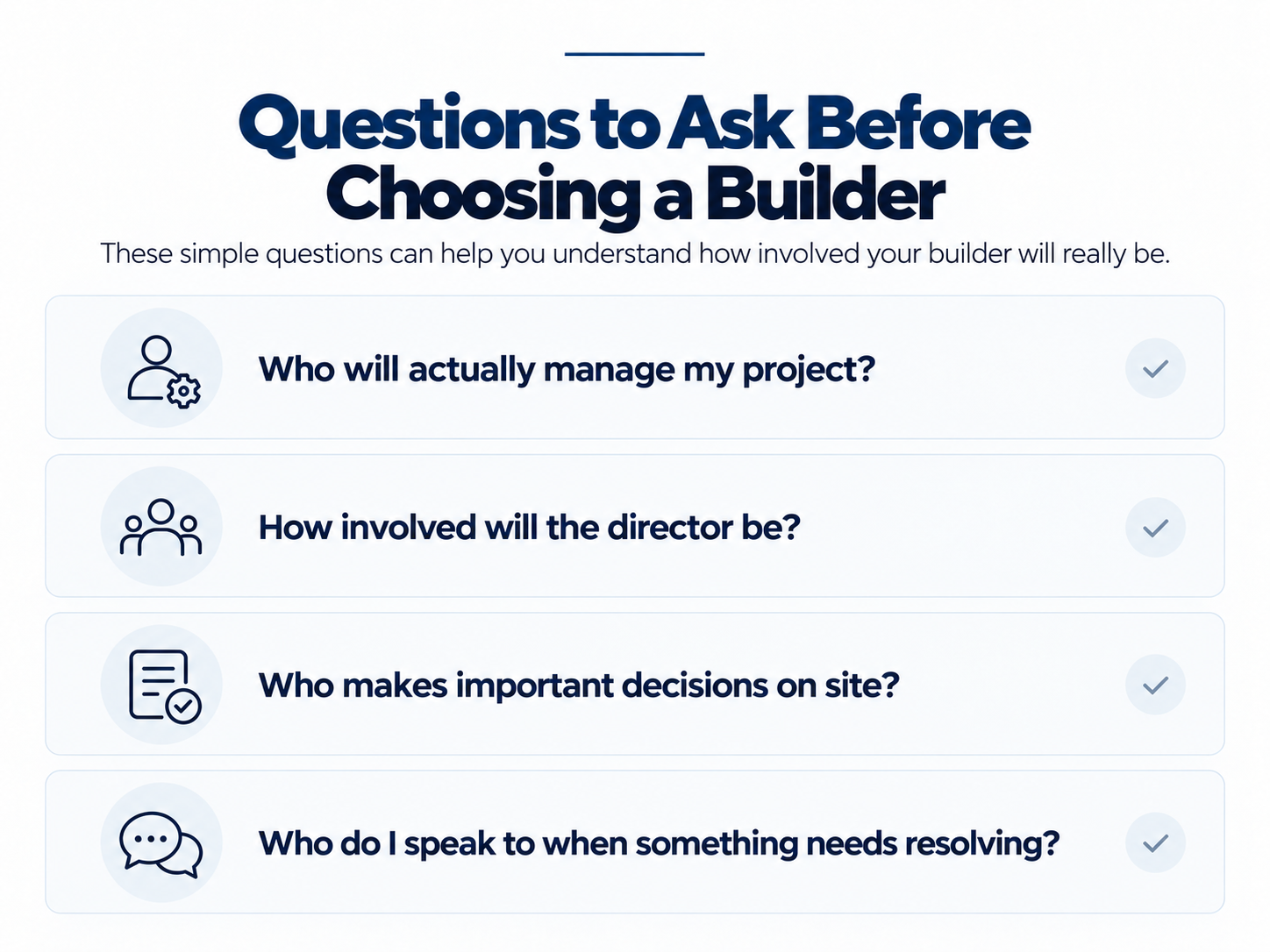
The answers can tell you a lot about what your building experience will actually look like.
Meet Lachlan
Choosing a builder isn’t only about choosing a company.
You’re choosing the people you’ll be working with for a significant period of time.
Before making that decision, it’s worth knowing who will actually be involved once your project moves from drawings into construction.
At Caton Constructions, Lachlan McDonald remains directly involved throughout the process, from the early project conversations through to the build and handover.
If you’re planning a custom home, duplex or major renovation and want to understand what a director-led approach could look like for your project, start with a conversation.
Speak with Lachlan and tell us what you’re planning.